


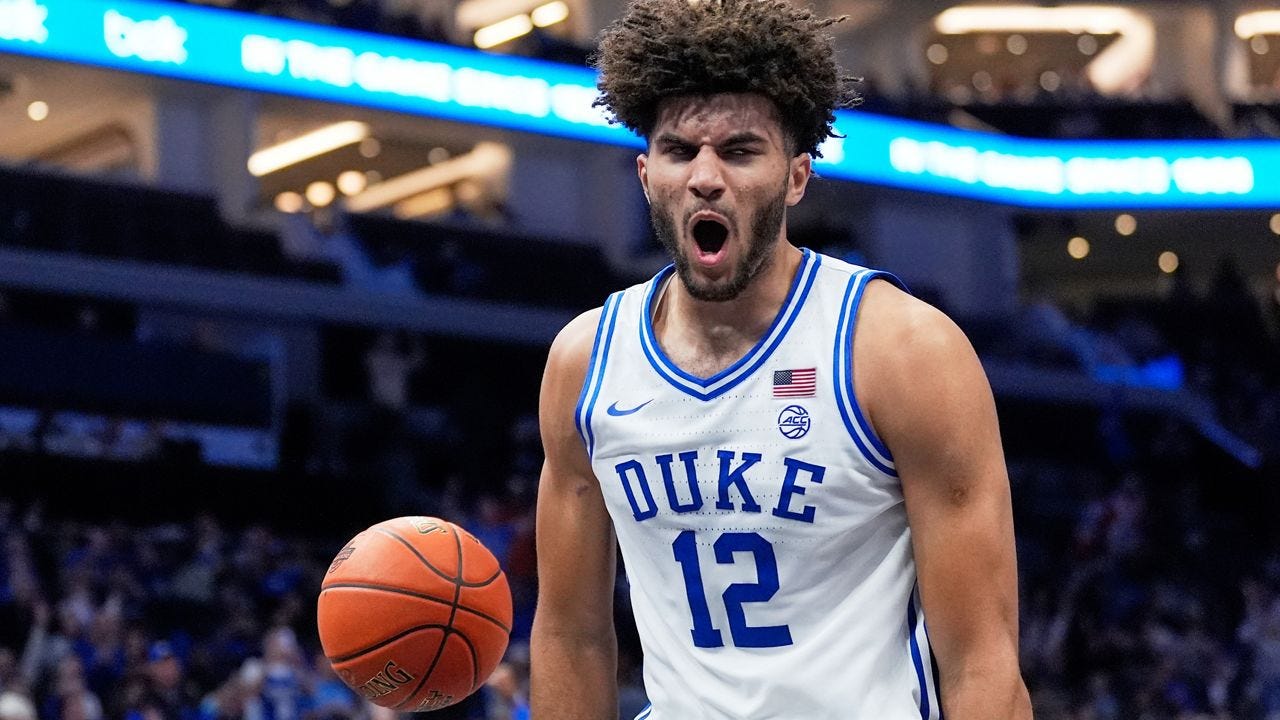
The NBA Draft cycle is in full swing with March Madness having arrived, and my personal big board has been tweaked relentlessly over the past few months.
This draft class is like none I’ve ever covered before: there is more talent at the top of the draft and there is more talent deeper in the draft. I can say it’s the “best” class of the past decade from a pre-draft evaluation.
The conversation at the top of the class will be an interesting one, with all three top prospects (Cam Boozer, Darryn Peterson, and AJ Dybantsa) having a case to be the first overall pick.
Before we get into it, let’s talk about some of the traits I value, and the traits I tend to avoid.
Age and developmental curve: I really try to avoid ranking much older prospects higher, particularly if they were a late breakout. You’ll see players such as Yaxel Lendeborg and Thomas Haugh ranked lower here. Those are players that are a bit older and don’t have as much upside as other younger players in this class, to me.
Decision-Making: I tend to value players with a high feel for the game and quick processing speed. The faster a player makes a decision (dribble, pass, shoot), the better off they are at extending advantages and making up for athleticism deficiencies.
Rarity: I will usually value a skill set that is harder to come by. I like ball-handling wings, bigger playmakers, bigs that move well or shoot. I’m less inclined to rank common skill sets higher: smaller guards, power scorers, rim-running bigs.
As for now, my board goes as follows:
Tier 1: Worthy of #1 Overall
All three of these players are worth the first overall pick.
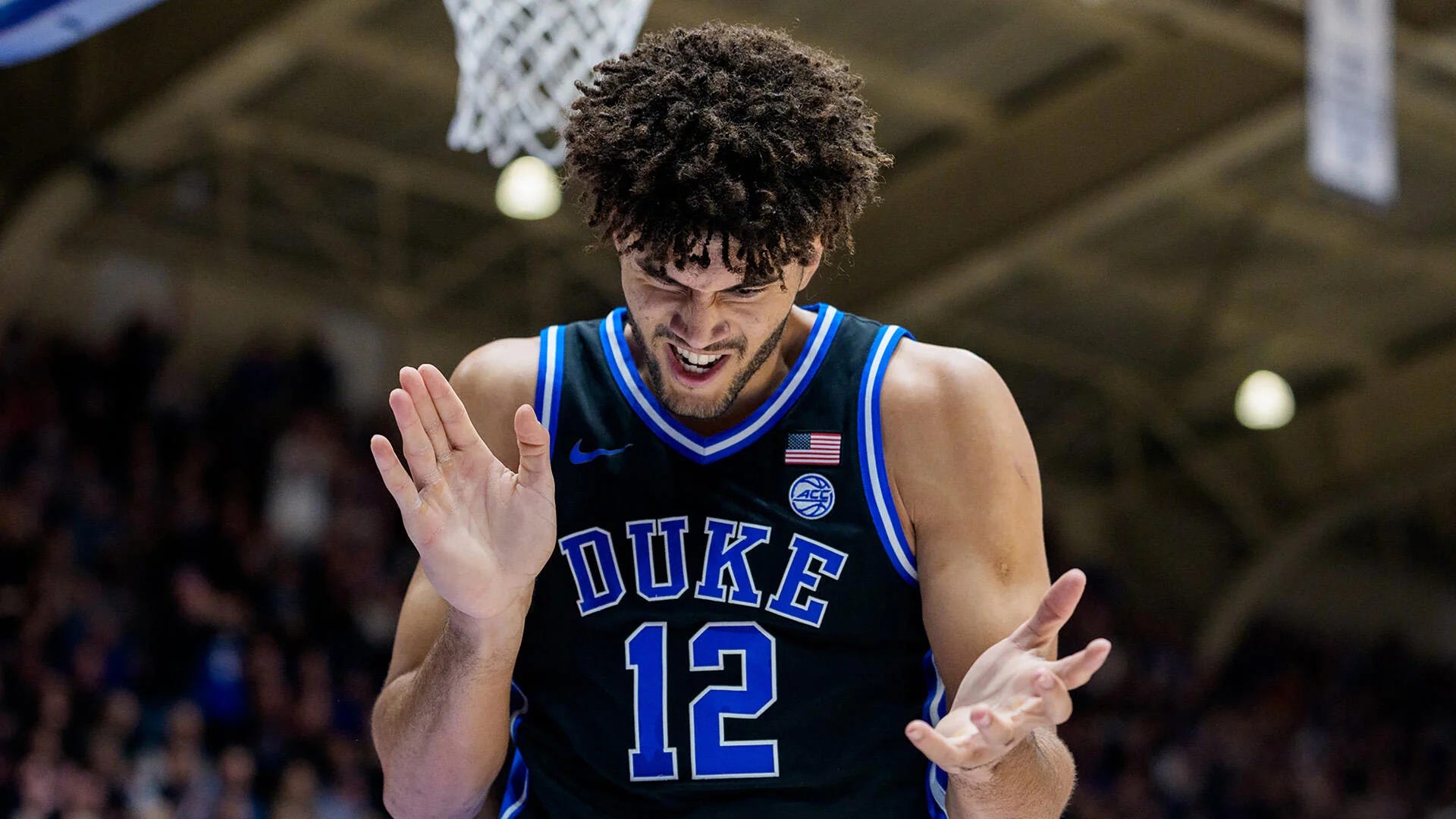
1 - Cam Boozer - F - Duke
I really do think Cam Boozer has continued to make himself the most valuable player in this draft class. I struggle to nitpick weaknesses in his game. While some will point to a lack of vertical athleticism and undercooked defensive prowess at times, Boozer has the makings of an elite offensive engine from the power forward spot.
Boozer is averaging 23-10-4 on elite shooting splits. He’s also doing that at 18 years old. That’s just not a player that comes around often.
While you could make a case for any of the top-3 prospects in this spot, my personal preference is Boozer, who I think has the highest floor and easiest scalability of any of the three. I think his ceiling is comparable to both of Peterson and Dybantsa, as well.
2 - AJ Dybantsa - W - BYU
AJ Dybantsa is a shot-hunting wing that had arguably the single-best game of any draft prospect this season against Arizona last month, tallying a stat line of 35 points, 13 rebounds, 8 assists, and 4 stocks.
NBA teams salivate over tall wings with ball-handling ability, and I’d currently bet on Dybantsa being the first overall pick.
3 - Darryn Peterson - G - Kansas
There are a ton of questions about Darryn Peterson’s time at Kansas, but looking from the outside - I’m willing to waive away some of those concerns based on his high school film.
In a perfect world, we’d have seen the explosiveness and playmaking that Peterson was able to show prior to his Kansas days, but a nagging injury and some general weirdness has dragged him down.
Still, I think there’s a scenario where a week into the NBA season, everyone recognizes that Peterson was very-much overthought as a prospect.
Tier 2: Better Than The Rest
Caleb Wilson deserves his own tier.
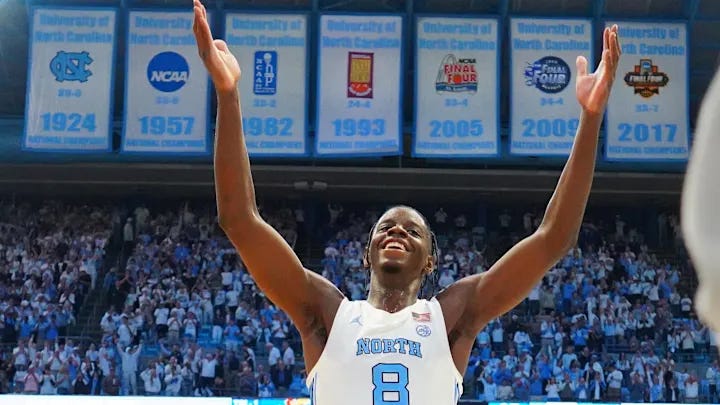
4 - Caleb Wilson - F - UNC
Caleb Wilson is a long forward that showed many of the traits that NBA teams love - defensive intensity, rebounding, and flashes as a ball-handler and scorer.
Wilson reminds me a lot of Pacers forward Pascal Siakam from a length and movement standpoint. And while Siakam has grown as a shooter throughout his career, opinions about Wilson’s outside shot will determine how high he goes on draft night.
Tier 3: Early Lottery Grades
This tier is comprised of players that I think are worthy of being selected in the top-half of the lottery (first seven picks) in a normal draft class.
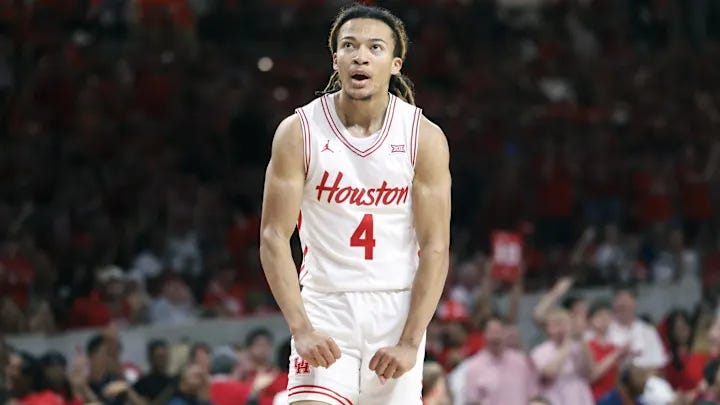
5 - Kingston Flemings - G - Houston
I’m fascinated to see the order at which the next four guards are taken on draft night, and I think it comes down to a team’s lead decision-maker’s “favorite flavor.”
Mine happens to be Flemings, who has explosiveness and playmaking that makes me think he is, at a bare minimum, going to be a franchise point guard for a long time.
I love how Flemings operates in the pick-and-roll, he generates rim pressure and is efficient in creating open, consistent looks for others.
My main concerns are around his shot diet. I’d like to see a greater volume of 3-pointers and free throws, but I’m all-in on Flemings being a primary creator at the next level.
6 - Keaton Wagler - G - Illinois
Since the start of 2026, Keaton Wagler is averaging 20 points, five rebounds, and five assists per game on 44/39/80 shooting splits. That’s incredible for a freshman guard.
There are some concerns about his athleticism, but I don’t necessarily think that’s a limiter on his potential. It’s hard to find guards that have the skill level of Wagner, and I’m willing to bet on his shooting and playmaking translating to the NBA level.
Wagler is a bit reminiscent of a prime Malcolm Brogdon - a high-efficiency guard that can flourish on or off the ball.
7 - Mikel Brown - G - Louisville
In the 20 games prior to sustaining a nagging back injury, Mikel Brown was climbing into the top-5 conversation, averaging 19/3/5 on 42/36/84 splits. He’s a really exciting young point guard prospect that thrives on his scoring ability.
I’d like to see some improvement regarding his efficiency across the board - as a shooter and playmaker, and making his 6-foot-5 frame a bit more pronounced on the defensive end.
8 - Darius Acuff - G - Arkansas
Darius Acuff is one of the most polarizing prospects I can remember. He’s unbelievably talented as a point guard. Acuff is tremendous as a scorer and playmaker for Arkansas. He’s averaging 23/3/6 on 49/44/80 shooting splits.
That’s just outrageous, and not something that should be normal for a 19-year old guard.
My questions around Acuff’s game are based on his defense. It’s bad, he is one of the worst guard defenders I’ve evaluated. And if he’s going to be so bad on defense, that will limit his value. Especially when it’s hard to see him getting much better on that end.
I mean, we just saw the theoretical Acuff ceiling comparison (Trae Young) get salary dumped at the trade deadline.
I’m far from being out on Acuff, I think he can be the offensive engine for an NBA team, but my questions about his value in a playoff setting (and defensive drawbacks) lead me to being lower on him than most.
9 - Brayden Burries - W - Arizona
I think Brayden Burries will be a consistent top-10 pick in Mock Drafts come June. I like his two-way style of play, and he’s productive as a 20-year old on one of the premier teams in college basketball.
He’s got size as a two-guard, can generate consistent rim pressure, and has shown efficiency from three.
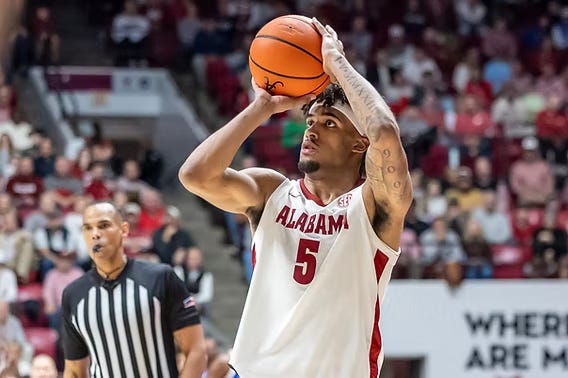
10 - Labaron Philon - G - Alabama
I don’t think Labaron Philon goes this high in the NBA Draft due to the amount of guards in the lottery, but you can count me as a fan of his game.
Philon has tons of scoring ability, can playmake for others, and has shown some real “want-to” on the defensive end of the floor. I have concerns about his ability to hold up against the physicality of the NBA level, but think his game should translate nicely.
Tier 4: Late Lottery Grades
Players that I think are worthy of being selected in the lottery most seasons. Generally I will have 10-12 players graded out at lottery prospects. This is not a normal draft class, however.
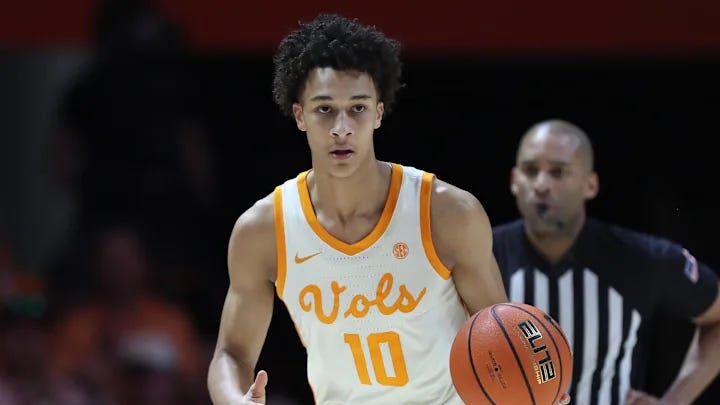
11 - Nate Ament - F - Tennessee
I get that Nate Ament has been falling on draft boards lately, but I can only drop him so far. Ament is a 19-year old, 6-foot-10 forward that had a 16-game stretch averaging 20/6/2.
That’s really good! Especially as an SEC freshman.
Ament could go as early as the fifth overall pick or as late as the 20th overall pick. I believe in the offensive talent, and think that the right coach and system could get the most out of him.
12 - Braylon Mullins - G - UConn
I believe that Braylon Mullins will be a pre-draft process riser. He’s got a lot more to his game than he was able to show at Connecticut this past season.
Mullins has some real athletic bounce, more of a handle than he’s shown, and, of course, the shooting. While I doubt he measures in at a true 6-foot-6, I think Mullins is more than worth a bet in the lottery.
13 - Jayden Quaintance - B - Kentucky
Jayden Quaintance is a pretty massive projection based on what he showed at Kentucky this past season. But my reason for believing in him comes from what he accomplished at Arizona State as a 17-year old in 2024-25: he averaged 9.4 points, 7.9 rebounds, and 2.6 blocks.
That is incredible for a player that should be a senior in high school.
I get the injury concerns, but Quaintance has been a special defender when on the floor. He’s worth a bet early.
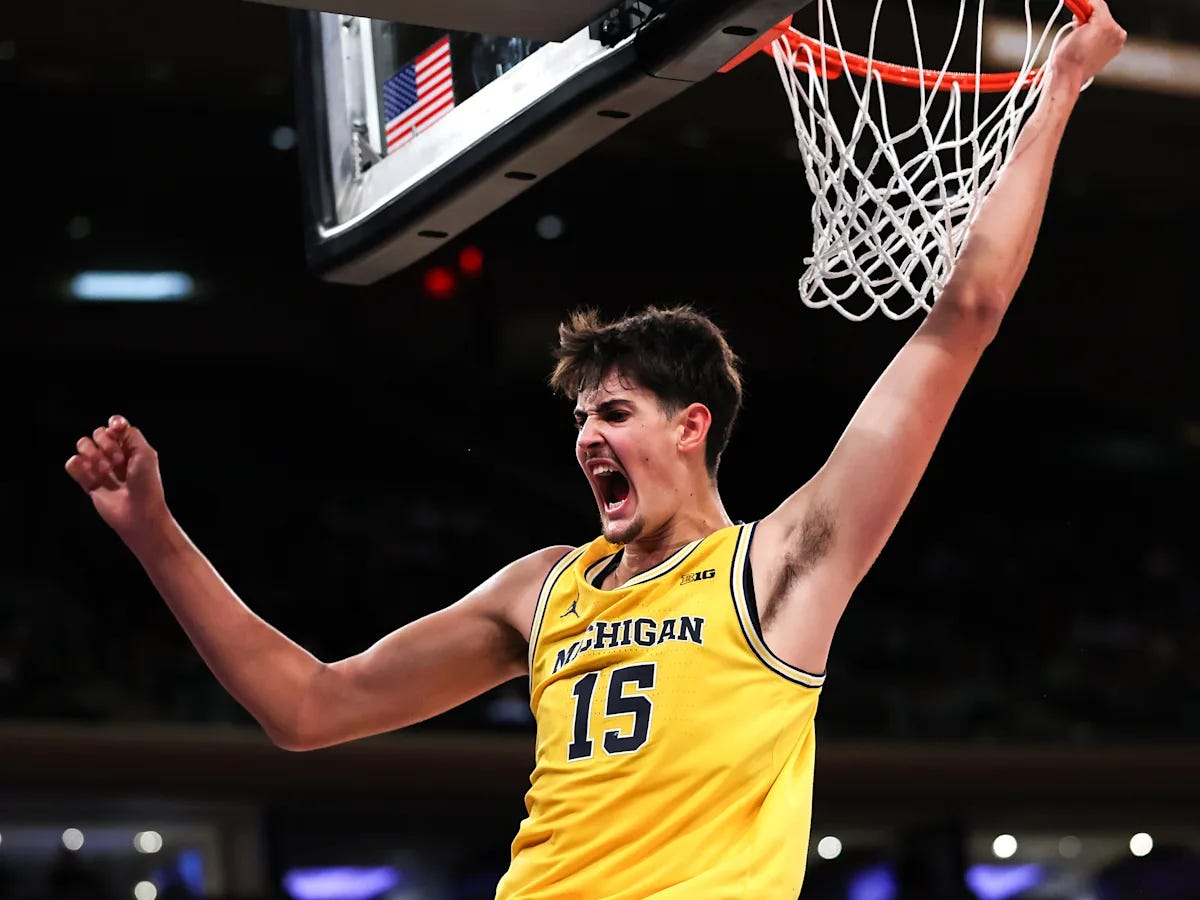
14 - Morez Johnson - B - Michigan
Morez Johnson is my kind of big prospect. He’s big, long, moves well for his size, and has shown some real flashes of being able to shoot it from NBA distance. Johnson is efficient inside, has real touch from the free throw line, and brings elite rebounding.
I think Johnson will be able to hang defensively in the NBA, but his ceiling will be determined by how far his shot will develop. If it’s consistent and at volume, he could become a very valuable starter.
15 - Koa Peat - F - Arizona
I just can’t quit Koa Peat. He’s a physical presence that crashes the rim offensively, and shown some good positional versatility on defense.
It’s really hard for players with the physical tools and motor of Koa Peat to fail at the NBA level. And I think he’s got some solid feel for the game in his decision-making.
16 - Hannes Steinbach - B - Washington
Hannes Steinbach is one of the more under-discussed freshmen in college basketball, but he had quite an amazing season for Washington, averaging 19 points and 12 rebounds on 58/34/76.
Steinbach is the best rebounder in this draft class, though I’m not sure he will be able to consistently guard centers at the next level. And if he can’t do that, he will almost certainly have to continue to develop his outside shot.
17 - Christian Anderson - G - Texas Tech
While I’m not sure Christian Anderson declares for the draft this season, he would immediately bring two elite skills to the NBA: his shooting and passing.
Anderson is currently averaging 19 points and eight assists per game on 48/43/80. He’s a special perimeter talent, though I have questions about his ability to work inside the arc.
Texas Tech will almost certainly do their best to retain Anderson, in which case he’d be one of the best players in college basketball in 2026-27.
18 - Chris Cenac - B - Houston
Chris Cenac is a modern big prospect who moves well for his size (while not skipping out on any of the physicality). Cenac is a fairly unpolished prospect, he's not overly consistent as a shooter (and was not all that great at the FT line this season), but he’s a clean fit for almost any team that needs help in the front court.
A while back, Nic Claxton coined the term “project that can play.” Cenac fits into that mold, in my opinion.
19 - Karim Lopez - F - INTL
Karim Lopez is one of the more intriguing players in this draft, to me. He got much better as the NBL season went along, and was fairly productive considering his age.
It’s a weird profile, Lopez doesn’t move all that well for his size and has shown some inconsistency in his shooting, but he has length, great instincts on the basketball court, and a solid handle for his size.
20 - Bennett Stirtz - G - Iowa
I am not generally a fan of prospects this old, but Stirtz broke out the moment he was on a D-I college basketball team.
This season, he’s been absurdly efficient, averaging 20/3/5 on 49/38/85 splits on an Iowa team that is a slog offensively. I think, bare minimum, Stirtz will be a backup point guard, with the potential to be much more.
Tier 5: First-Round Grades
These are the players that I think are worthy of being selected in the first round in most draft classes.
21 - Amari Allen - F - Alabama
22 - Ebuka Okorie - G - Stanford
23 - Yaxel Lendeborg - F - Michigan
Yaxel Lendeborg is a really good college basketball player, but I’ve got a lot of concerns about his age and NBA projection. Lendeborg will be 24 years old before stepping on an NBA floor for the first time.
And while the age in itself is not an issue (we’ve seen older prospects succeed in the NBA), Lendeborg isn’t really the ready-made role player he’s generally made out to be, in my opinion.
If he’s going to be a power forward, I’m not super confident in the long-range shot. Lendeborg has been inconsistent from outside throughout his college career, and only shot 34% from three on 4.3 attempts per game.
I see more Lendeborg more as a center, he’s versatile defensively and consistently generates both steals and blocks. But ultimately, I’m just not sure how much I value that type of player - especially if he will be entering the league at 24 years old.
I can see the vision, but Lendeborg just isn’t the bet I would make in the top-20 - particularly in this draft.
24 - Thomas Haugh - F - Florida
25 - Maleek Thomas - G - Arkansas
26 - Isaiah Evans - W - Duke
27 - Billy Richmond - W - Arkansas
28 - Tyler Tanner - G - Vanderbilt
I’ve come a bit more around on Tanner. While the size does scare me, I do buy into him being a defensive playmaker for his size, even if he will be targeted defensively due to his size.
29 - Cam Carr - W - Baylor
30 - Patrick Ngongba - B - Duke
Pat Ngongba is a very impactful interior defender when he’s on the floor, but the injuries scare me a bit with him.
31 - Tounde Yessoufou - W - Baylor
32 - Dailyn Swain - W - Texas
33 - Flory Bidunga - B - Kansas
Tier 6: Second-Round Grades
These are the players that I would deem worthy of second-round picks in an average draft class.
34 - Aday Mara - B - Michigan
35 - Motiejus Krivas - B - Arizona
36 - Joshua Jefferson - F - Iowa State
37 - Henri Veesaar - B - UNC
38 - Dame Sarr - W - Duke
39 - Allen Graves - B - Santa Clara
I’m very intrigued by Allen Graves. He’s been very good when he’s on the floor for Santa Clara (and will test will in analytical models). I think the idea of Graves is probably much better than the actual prospect, in practice.